
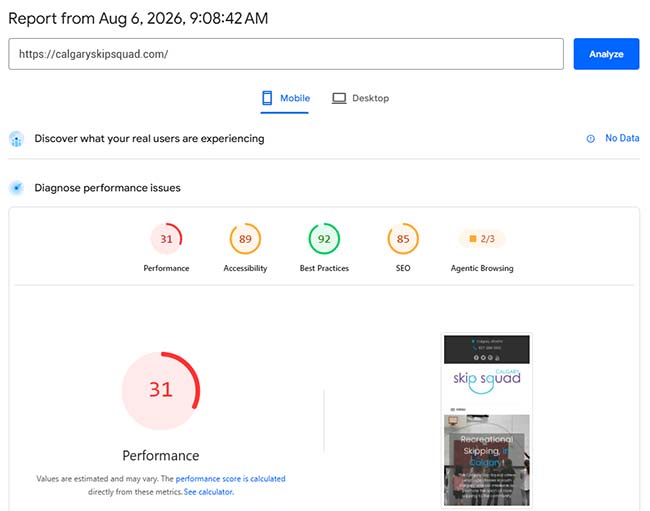
A website can look great and still be slow. That’s what we found when we first tested the Calgary Skip Squad website using Google PageSpeed Insights. The website had the content, photos and functionality it needed, but the initial mobile performance score was only 31/100. Desktop was better at 68/100, but there was still plenty of room to improve.
So, instead of simply accepting the results, we started looking at what was slowing the site down and where we could make improvements without changing the overall look and feel of the website.
How It Started

Mobile Performance: 31/100
The difference between the two was significant. A website shouldn't just look good on a desktop computer. It needs to perform well everywhere.
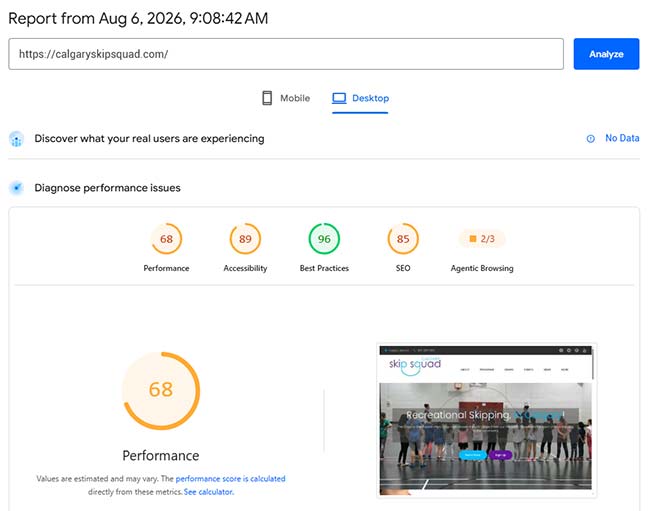
Desktop Performance: 68/100
The desktop experience was reasonably strong, but mobile performance had considerable room for improvement. And that's important because a large percentage of website visitors today are accessing websites from their phones.
The Goal
The goal wasn’t to chase a perfect Google score just for the sake of having one. We wanted the website to load faster, feel better to use and perform well on both mobile and desktop.
That meant focusing on a few key areas:
- Faster page loading
- Better mobile performance
- More efficient image loading
- Reducing unnecessary resources
- Improving the overall user experience
- Keeping the website looking the way it was designed
Google’s PageSpeed Insights testing gave us a useful way to measure the changes and see whether the work was actually making a difference.
What We Optimized
Website speed usually isn’t caused by one single problem. It’s often a combination of images, scripts, page elements and other resources all adding to the time it takes for a page to load. We worked through the website and looked for areas where we could improve performance without compromising the design.
Image Optimization
Images are an important part of the Calgary Skip Squad website, but large image files can also slow a page down. We optimized the site’s images to reduce unnecessary file size while keeping them looking sharp. The goal was to find the right balance between image quality and website speed.
Page Resources
A website has more going on behind the scenes than most visitors realize. Fonts, scripts, stylesheets and other resources all have to load when someone visits a page. We reviewed these resources and looked for opportunities to reduce unnecessary loading and improve how important elements were delivered to the browser.
Mobile Performance
This was one of the biggest areas of focus. A website can perform reasonably well on a desktop computer and still struggle on a mobile device. Mobile users may have a slower connection or less processing power, so we specifically looked at how the website loaded and behaved on smaller screens. The result was a much stronger mobile performance score.
Overall Website Efficiency
Rather than focusing on one individual metric, we looked at the website as a whole. The objective was simple: make the site more efficient without taking away from the design, content or functionality.
The Results

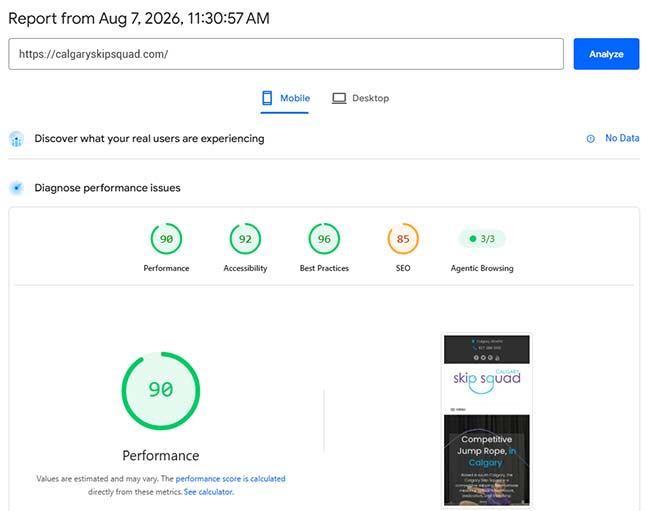
Mobile Performance: 90/100
The site moved from the red performance range into Google's green range.
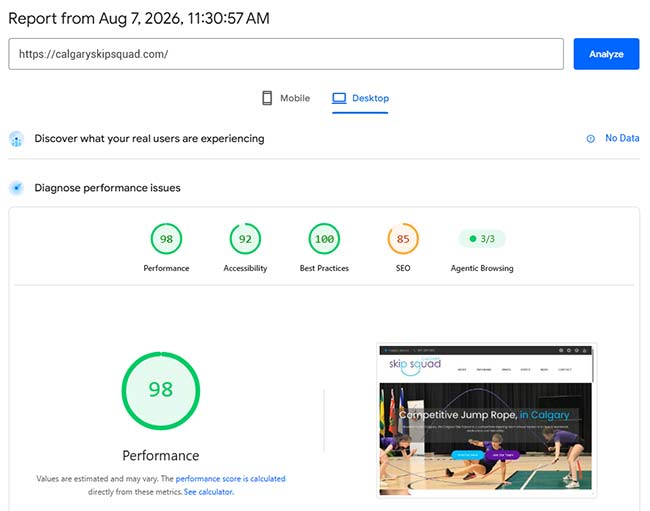
Desktop Performance: 98/100
The desktop experience moved from the orange range to an exceptionally strong performance score.
The Results
The improvements weren’t limited to the Performance score. Other PageSpeed metrics also improved.
| Metric | Before | After |
|---|---|---|
| Mobile Performance | 31 | 90 |
| Mobile Accessibility | 89 | 92 |
| Mobile Best Practices | 92 | 96 |
| Desktop Performance | 68 | 98 |
| Desktop Best Practices | 96 | 100 |
| Agentic Browsing | 2/3 | 3/3 |
The SEO score remained at 85, which is a good reminder that website optimization isn’t a one-and-done process. There is always another opportunity to improve.
Why This Matters?
Website speed isn’t just about getting a better number in Google (it is important though!) It’s about the experience people have when they visit your website.
If someone clicks on your website from their phone and the page takes too long to load, there’s a good chance they’ll move on before they ever see what you have to offer. A faster website makes it easier for visitors to find information and browse your services. A website should look good, but it should also work well.
Want a Faster Website?
If your website looks great but feels slow, you may not need a complete redesign. You may simply need to identify what’s slowing it down. We can review your website, identify potential performance issues and recommend practical improvements to make it faster and easier to use — without starting from scratch.
